In the villages around Mosaboni, a child who stays in school changes the trajectory of an entire household. Here is what two decades of bridge courses and literacy centres have taught us.
When RODS began working in the Mosaboni region in 2004, the pattern was familiar in every hamlet we visited. Children enrolled, attended for a few years, and then quietly disappeared from the classroom — pulled away by migration, by farm work, or simply by a school that felt too far from the realities of home.
Education was never treated as a stand-alone programme at RODS. It was the entry point. A family that sends its children to school engages differently with health services, with the Panchayat, with the bank. That is why our education work has always run alongside health camps, water projects and Self-Help Groups rather than apart from them.
Bringing children back to the classroom
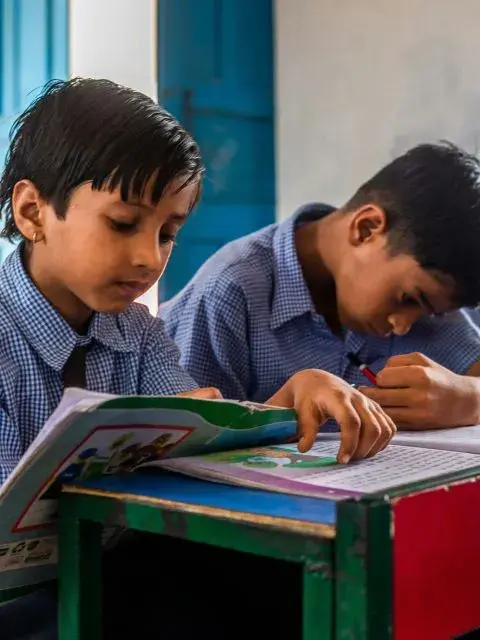
The Residential Bridge Course (SETU) and the Non-Residential Bridge Course (NRBC) were designed for exactly this gap. Out-of-school and dropout children were identified, given intensive remedial teaching, life skills support and a child-friendly environment, and then reintegrated into formal schools.
- Around 110 dropout boys and girls were mainstreamed through the SETU residential programme.
- 36 out-of-school children returned to the formal system through NRBC community-based centres.
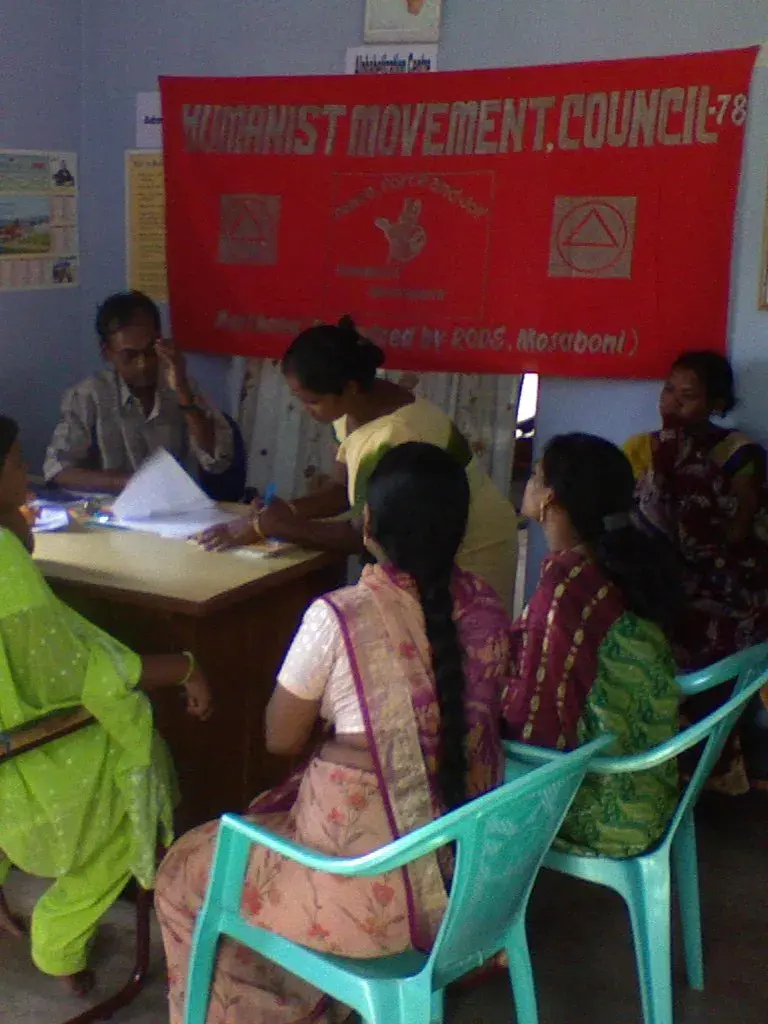
- 400 non-literate adults gained functional literacy through 10 literacy centres in Mosaboni Block.
Literacy does not stop with children
The adult literacy programme changed how we think about impact. Learners who could suddenly read a form, sign their own name or check a calculation began accessing government schemes, banking services and healthcare without an intermediary. For women in particular, that independence reshaped their standing at home and in the community.
Sustainable change happens when communities own the process. Our role is to open the door, build local capacity, and then step back as teachers, parents and village institutions carry the work forward.